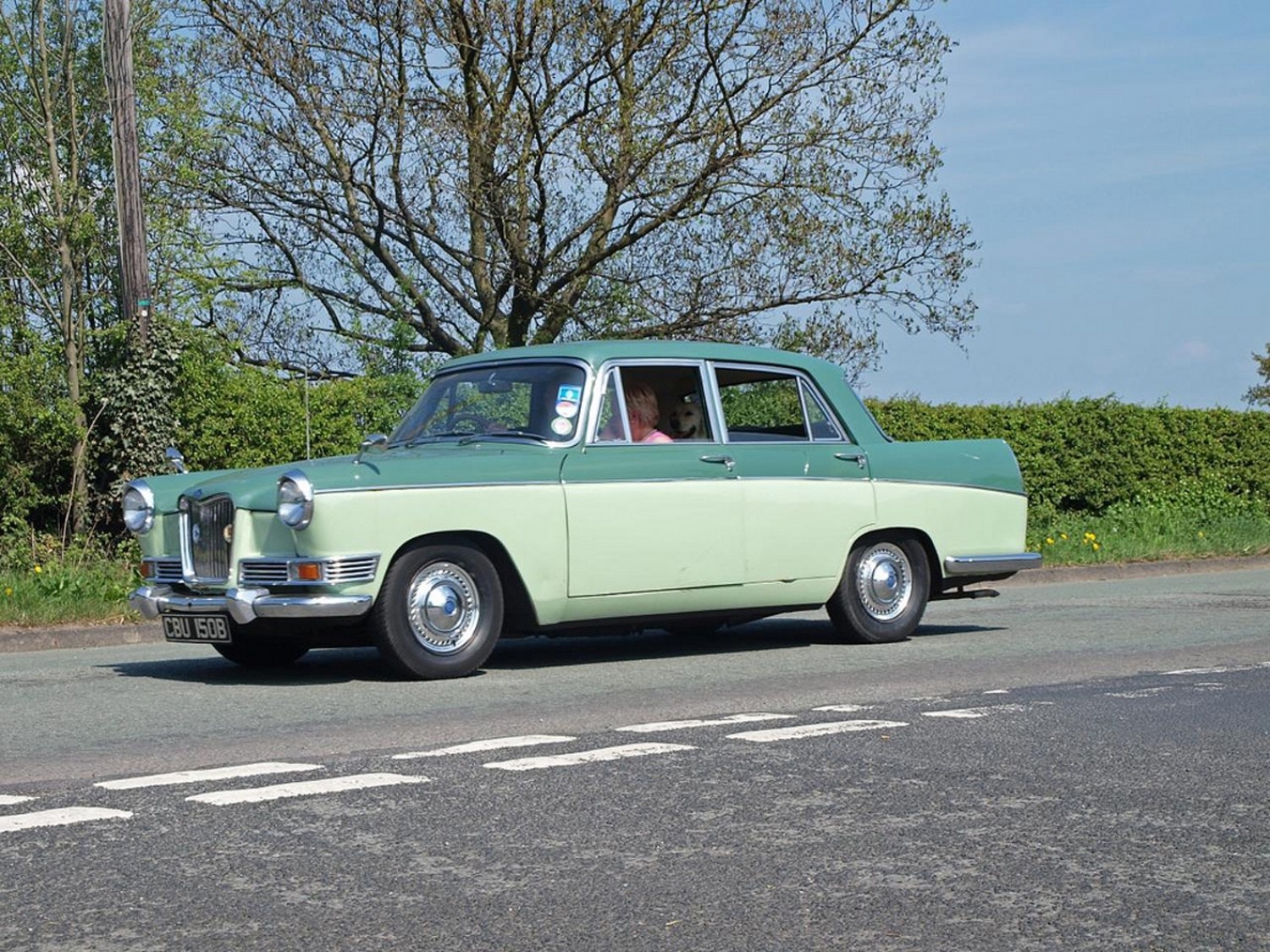
THERE is little doubt that BMC, a massive British car manufacturer in the 1960s, had badge-engineering down to a fine art.
The thing was that BMC then owned some of Britain's greatest and most historic names in motoring - brands such as Riley, Wolseley, Morris, Austin and MG - and its policy was to continue selling cars bearing these famous badges.
The problem was that to develop individual designs befitting these names was out of the question due to the massive costs of development and manufacturing.
So BMC went down the path of badge-engineering - selecting a basic sound design and tweaking it to suit the marques in question.
In the case of the medium saloon of the day (large by today's standards) the company took an advanced Farina design and waved the wand over it enabling it to multiply into a raft of different cars, each bearing the name of a well-known British brand.
This may sound simplistic but at the time it worked so well. The same car could be seen as a basic but smart Morris Oxford or Austin Cambridge or a sporty MG, a smart Wolseley or an opulent Riley.
They were all different in their own way with performance variations, trim and bodywork changes and careful doctoring to ensure that they shouted to the world what badge they were carrying.
At the top of the tree was the Riley 4/68 which was later developed into the much better 4/72.
This design started life in 1959 and the two versions drove on for a decade in the new car market.
Riley was always known for its rakish and very smart performance saloons in earlier years and this the ultimate Farina design echoed this with sharp styling and a twin-carb four-cylinder engine with 91mph in its sights in later years.
Engine capacity grew from 1,489cc to 1,622cc and the car was nearly always seen with some very imaginative two-tone paint jobs.
Inside the car it was walnut trim and leather all the way and it found many friends. The 4.68 made 10,940 sales and the 4/72 improved on that figure with 14,151.
It was also popular abroad selling as the strangely named Siam de Tella in Argentina - a model range that even included a pick-up truck. The 4/72 was also sold as the Riley Comet in Austria.
A 4/68 tested by The Motor in 1959 could accelerate from 0-60mph 18.8 seconds and had a fuel consumption of 27.3mpg.
That car cost £1,028 including taxes, a hefty price for its day. But at the Earls Court Motor show of 1964 lower purchase tax and only a minimal basic price rise meant the much better 4/72 was actually cheaper at £917.
Rather appropriately one of its main competitors was another badge-engineered beauty, the Humber Sceptre which appeared in 1963. This car, from the Rootes Group was roughly based on the Hillman Super Minx and there has been much comment over which was better.
At the end of the day it boils down to personal preference and my vote would have to go to the Riley.