CITROEN'S C4 Cactus looks like an armoured car in miniature, but it is destined for less demanding environments than a military zone.
This oddball small family hatchback, with its heavy macho cladding, looks every bit a rugged compact SUV - but looks are deceiving.
The heavily-clad Cactus is no 4x4 but presents a striking image which sets it apart from the rest of the crowd in the supermini hatch sector: no other contender in its class comes anywhere close to such a distinctive, quirky profile.
Citroen has ignored convention and boldly designed a town/city runabout which looks as though it can muscle its way through the densest urban jungle.
This, in essence, is what the Cactus is about: a tough, chunky contender that can battle through serious congestion and come out unscathed, plus that amazing image which gives it so much kerb appeal.
The SUV persona is conveyed by those heavyweight Airbump body panels on the flanks, together with further protective "bubble-wrapping" all round to deflect bumps and scrapes in town. Add the impressive roof rails and the 4x4 impersonation is complete.
Underneath the skin, however, is a simple two-wheel drive set-up with (in this instance) a 1.6-litre diesel engine which has good capability and thrift at its core.
The 1.6, 100bhp unit is strong and willing, taking the Cactus to a 114mph top speed and returning a decent 0-62mph dash in a reasonable 10.7 seconds.
But the big bonus are running costs: the 1.6 engine here manages an official average fuel return of 83.1mpg. On test, with main short trips on the agenda, the average return was closer to 58mpg which was perfectly acceptable.
Steering isn't the liveliest in class. But it was light and precise for easy driving and hassle-free parking. At higher speeds on the open road, the steering wheel weighted up nicely.
The five-speed transmission was responsive though travel through the gate was at times "rubbery". Braking seemed aggressive while the clutch tended to snatch. Driver sympathy reduced the impact.
Citroen has a history of producing comfortable cars, and the Cactus - despite its macho demeanour - was well composed under normal conditions. The soft suspension provides a pampered ride. The trade-off is that the Cactus tended to lurch through corners but the the motion isn't too exaggerated.
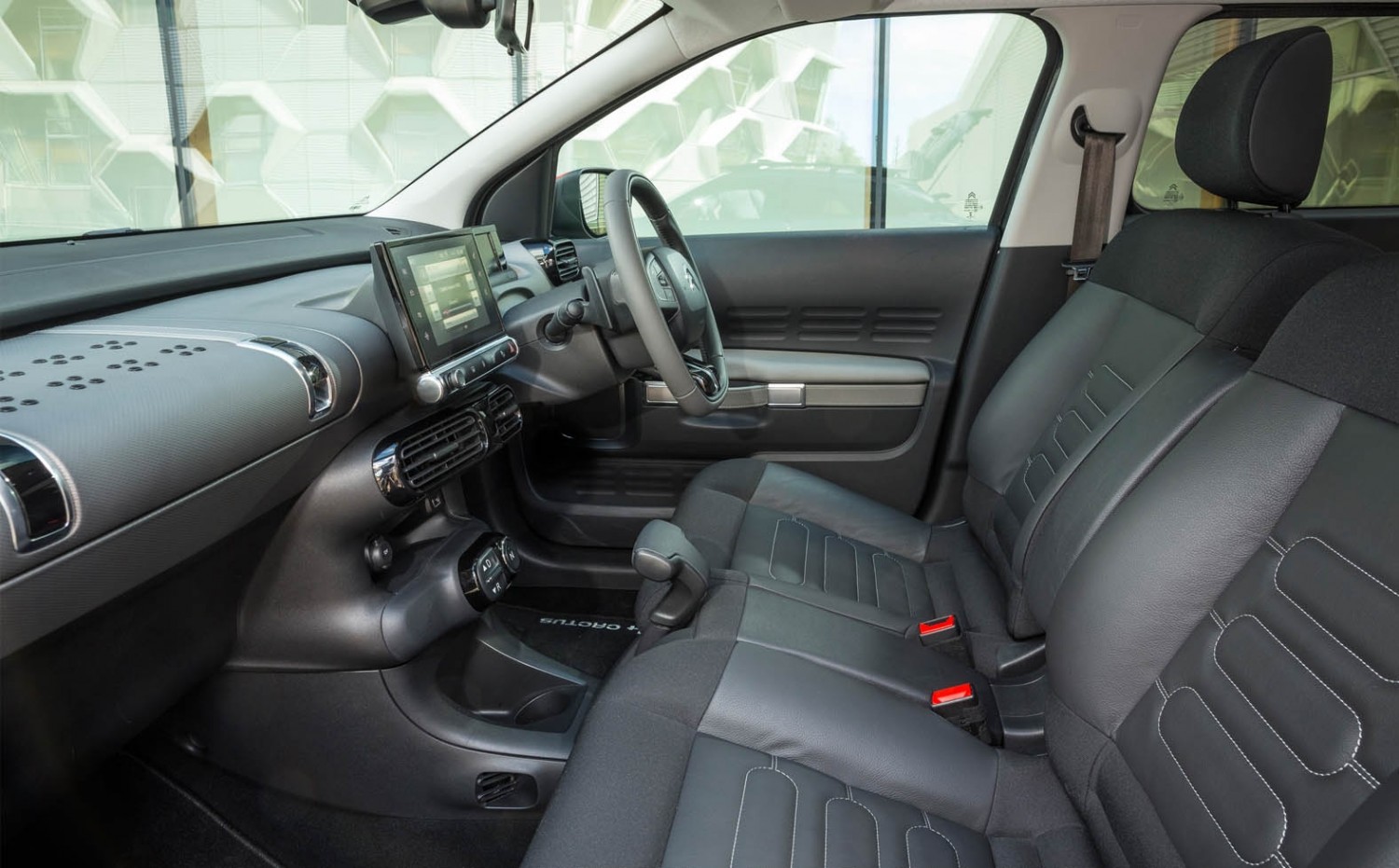
Inside the cabin oozes modernity and originality, with a slim fascia neatly incorporating screens and buttons which made for simple and easy use - and a minimalist look. Space in front is good though headroom for six-footers in the rear is slightly impaired by the optional sunroof which eats into some of the roof space.
The rear bench seat folds down okay, but this would have been better in a 60-40 split form to be more functional, while the boot is very generous, slightly marred by the fact that access s is over a deep lip.
Impressive CO2 emissions of just 89g/km, exempt the Cactus from road tax. Prices start as low as £13,000 for smaller, petrol engined cars and the entry trim. Here, the 1.6 range-topping Flair spec takes the cost up to £18,000. It isn't cheap, but there is more than a healthy list of equipment, plus some very nice, tactile touches.
Striking looks, affordability and low running costs are the trump cars for the Cactus - plus general amounts of equipment.
All models get a seven-inch touch screen system, cruise control, electric front windows, digital radio, USB socket. Move to mid-range Feel trim adds air-con, gloss black exterior trims and body-coloured door handles. The top-spec Flair, as here, adds colour reverse camera, auto air-con, eMyWay sat nav, hi-fi upgrade with six speakers, 17-inch special alloys, heated door mirrors and auto lights and wipers.
Options added to the test car included metallic paint, City Park pack, black and leather cloth pack, panormatic sunroof, eTouch Emergency and Assistance System, taking the total cost to £20,425.