YOU wouldn't buy one for its comfort or for its exotic lines. It has barely any more luggage room than a motorbike so space isn't an attraction, and with prices scaling up the £80,000 mark, it's hardly an economic choice.
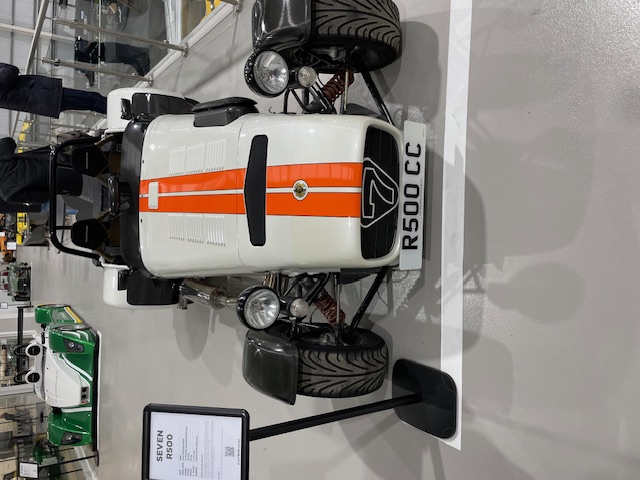
Yet the Caterham Seven, largely unchanged from Lotus founder Colin Chapman's original design in the 1950s has a global following dwarfing even the aristocrats of the motoring world.
The Lotus Seven started life as a basic lightweight road and track car back in 1957 and was immediately embraced by enthusiasts for its handling, design and speed.
When Chapman decided to end production of the two-seater in 1973, one of its major dealers Caterham Cars of Surrey bought the rights to continue manufacturing it. After a somewhat stuttering start, the Seven which weighs in at just around 500kg became established as a signature sports car of the 20 century.
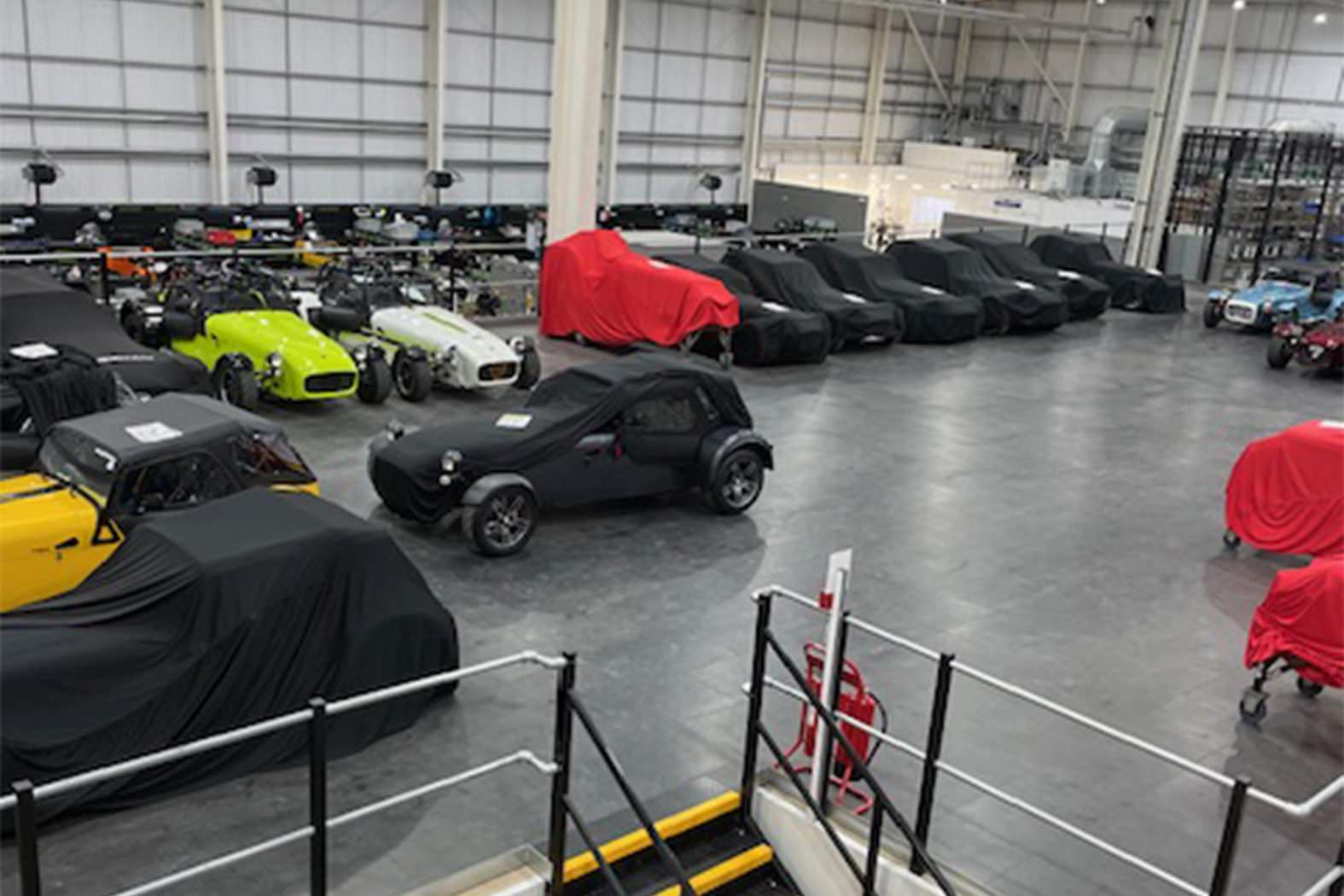
Today, from its recently opened factory at Dartford, Kent, within the ownership of Japanese firm VT Holdings, cars are made and exported all over Europe, to Japan, Czech Republic South America and the States. The split between road cars and track models is about 50-50.
Originally, most cars were sold as kits - and American legislation dictates that's still the case there - but the introduction of VAT on self-assembly cars vastly reduced their popularity. Most British owners opt for factory-built cars, which are just £2,600 more expensive.
With a string of celebratory owners such as Chris Rea, Rowan Atkinson and the late Patrick McGowan, alongside distinctive looks that make a Morgan - that other famous retro sports car - appear almost futuristic, it is hardly surprising there's at least a six month wait for the hand-built Seven.
But it's speed and handling finesse rather than styling that's at the heart of the matter. The renown heavily reworked Ford Sigma engined 620R with 310bhp (hence the model designation which illustrates the power-weight ratio) won PistonHeads' best track car of the last 25years accolade.
Lower down the scale are the 420R and 360R, the latter of which I had the opportunity of piloting from Malvern in Worcestershire through the Black Mountains to the mid-Wales coast on a blustery and damp afternoon.
Not only does the steering pick-up every road irregularity but it enables the driver to position that neat snout at the end of the bonnet exactly where it's needed through sweeping curves.
Of course, there's need for care with so much force being sent to the rear wheels but the superb balance allows controlled tail-out cornering. No need for Senna-like abilityâ¦fortunately.
The Sigma engines are now ending and Caterham is looking at using Horse engines - the product of an alliance between Renault, Daimler and Geely.
The high command at Caterham is used to adapting and changing, though the image of the seven may not make this fact apparent. There's also the prospect of electrification well short of the horizon.
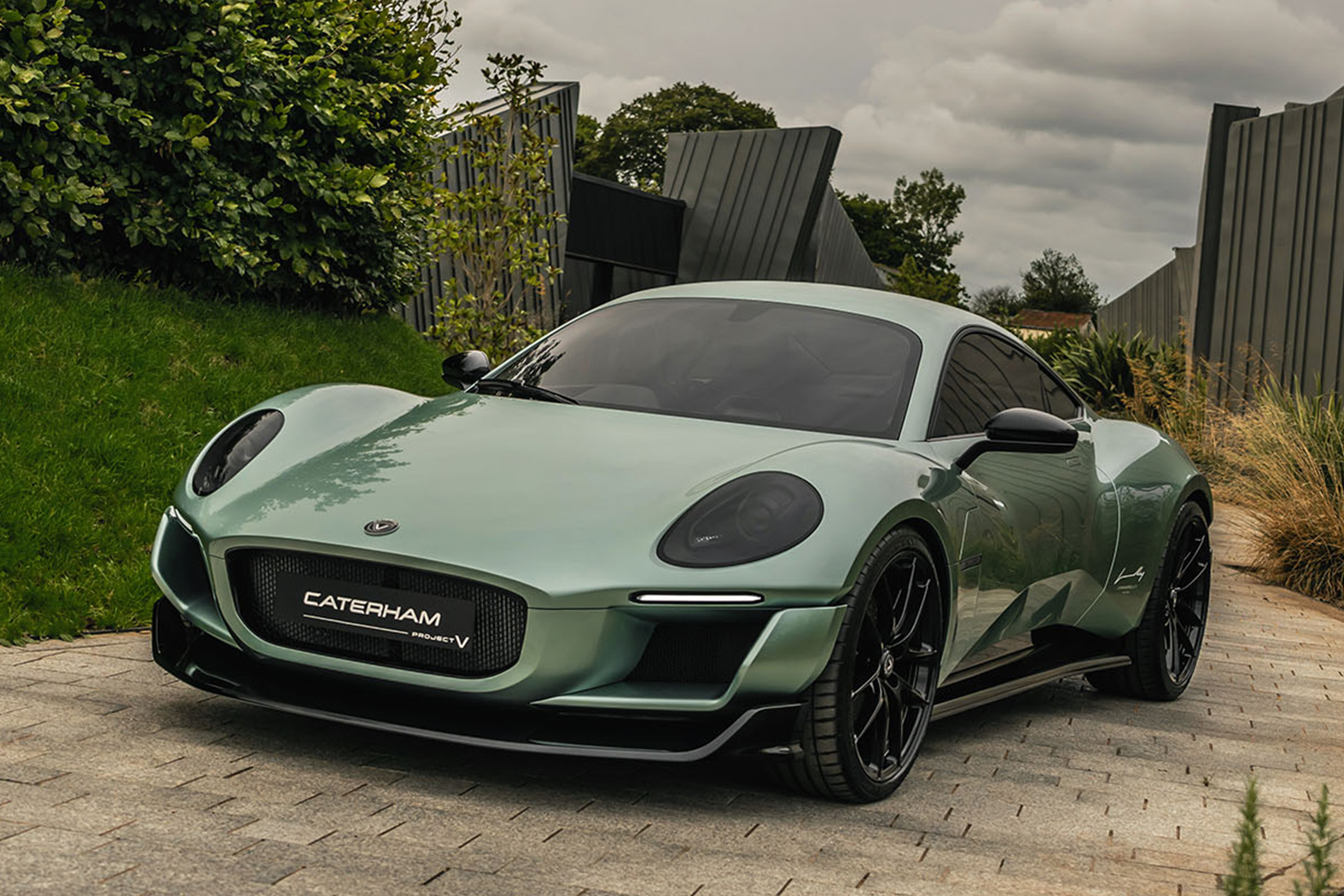
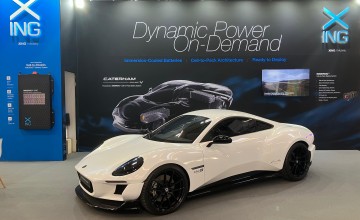
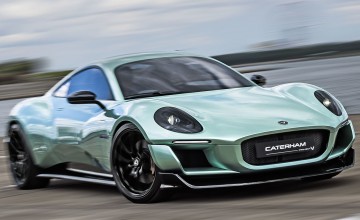
In fact, two battery powered Sevens were made and trialled, but perhaps unsurprisingly they won little support from potential customers. There is however Project V, Caterham's upcoming all-new electric sports car, for which a launch date is being given as ‘sometime in the future'.
Meanwhile, the iconic Seven which is said to have taken Colin Chapman just a few days to design more than six decades ago, goes from strength to strength.