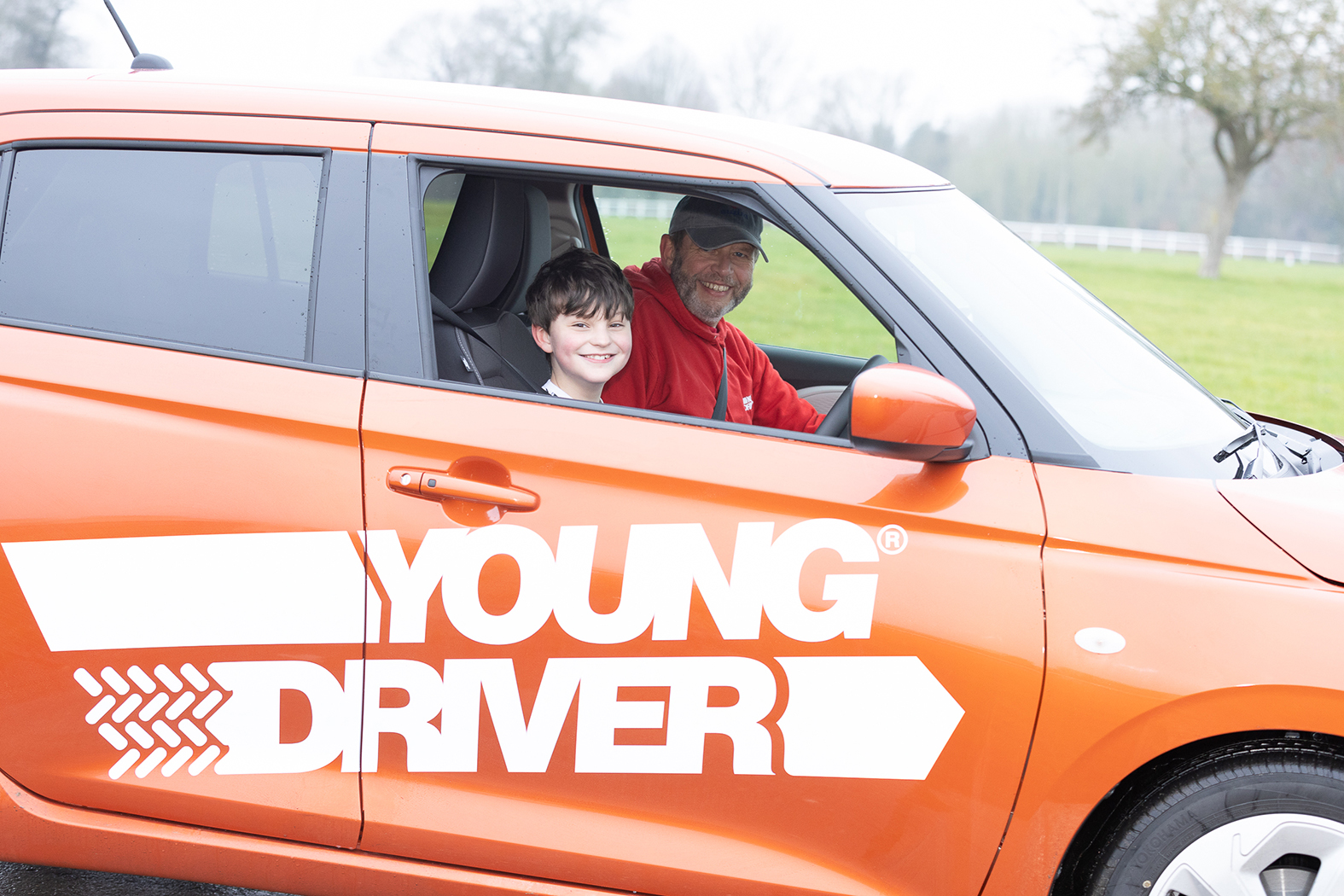
YOUNG Driver has welcomed the news that the government plans to extend the period over which teenagers learn to drive - whilst urging them to consider early driver education as a key part of the strategy.
The Road Safety Strategy, launched by the Department for Transport, confirms that the government plans to consult on introducing a three or six month minimum learning period for learner drivers.
That includes looking at a minimum amount of time spent learning, a minimum number of learning hours, a mandated learning syllabus and how learning should be conducted.
Young Driveris the UK's largest pre-17 driving school, having delivered 1.6 million driving lessons to youngsters aged between four and 17 since its launch 16 years ago.
Its managing director Ian Mulingani said: "We have always known that learning from a younger age, and therefore over a longer period of time, is an advantage when it comes to road safety. Our programme was developed on the back of Swedish research conducted in the 1990s.
"Research shows our pupils are 80% less likely to have a collision in the dangerous first six months after passing their test. It stands to reason that the more experience you have behind the wheel before yare allowed to drive solo, the better.
"But starting tuition at a younger age, in a completely safe environment, has wider benefits too. Children are like sponges, eager to learn. There's no pressure to pass a test, and no rush to prove you know it all - the process becomes more normalised and calmer. Having initial lessons off the public highway, at private venues, also makes sense, giving youngsters time to perfect the mechanics of driving before having to negotiate other road users and our busy streets.
"We know our pupils are better prepared for their driving test as 78 per cent pass first time, as opposed to the national average of 48 per cent.
"That is why we believe under-17 tuition, carried out in a structured and documented way with qualified instructors, should count towards experience in this consultation. The government needs to think about how this new policy would work in practice, rather than it just becoming a meaningless delay in people being able to take their test, and we would welcome theopportunity to be part of those discussions.
"We believe that the government's Lifelong Learning approach, with national guidance on the development and delivery of road safety education and training, needs to consider how we best teach younger children in a meaningful way that genuinely helps reduce deaths and injuries on our roads.
"Getting youngsters behind the wheel gives them a great insight into road safety as a pedestrian or cyclist too, allowing them to better understand things like stopping distances and blind spots."
Young Driver operates at more than 70 venues across the UK, as well as delivering driving lessons in schools through its Foundation arm. A road system is created, with traffic signs, roundabouts and junctions, along with special areas to practice manoeuvres such as steering control and parking.
The emphasis of the lessons is on safety and fun, encouraging youngsters to consider how to drive responsibly, giving them time to perfect driving skills such as gear changes, braking and steering without the pressures of public roads.
Nine to 17s learn in dual controlled cars, in a fleet of 170 Suzuki Swifts or similar cars, under the supervision of qualified instructors (ADIs).
Four to nine year olds can also begin their driver education in the scheme's fleet of specially created two-seater electric vehicles, the Firefly Sport.