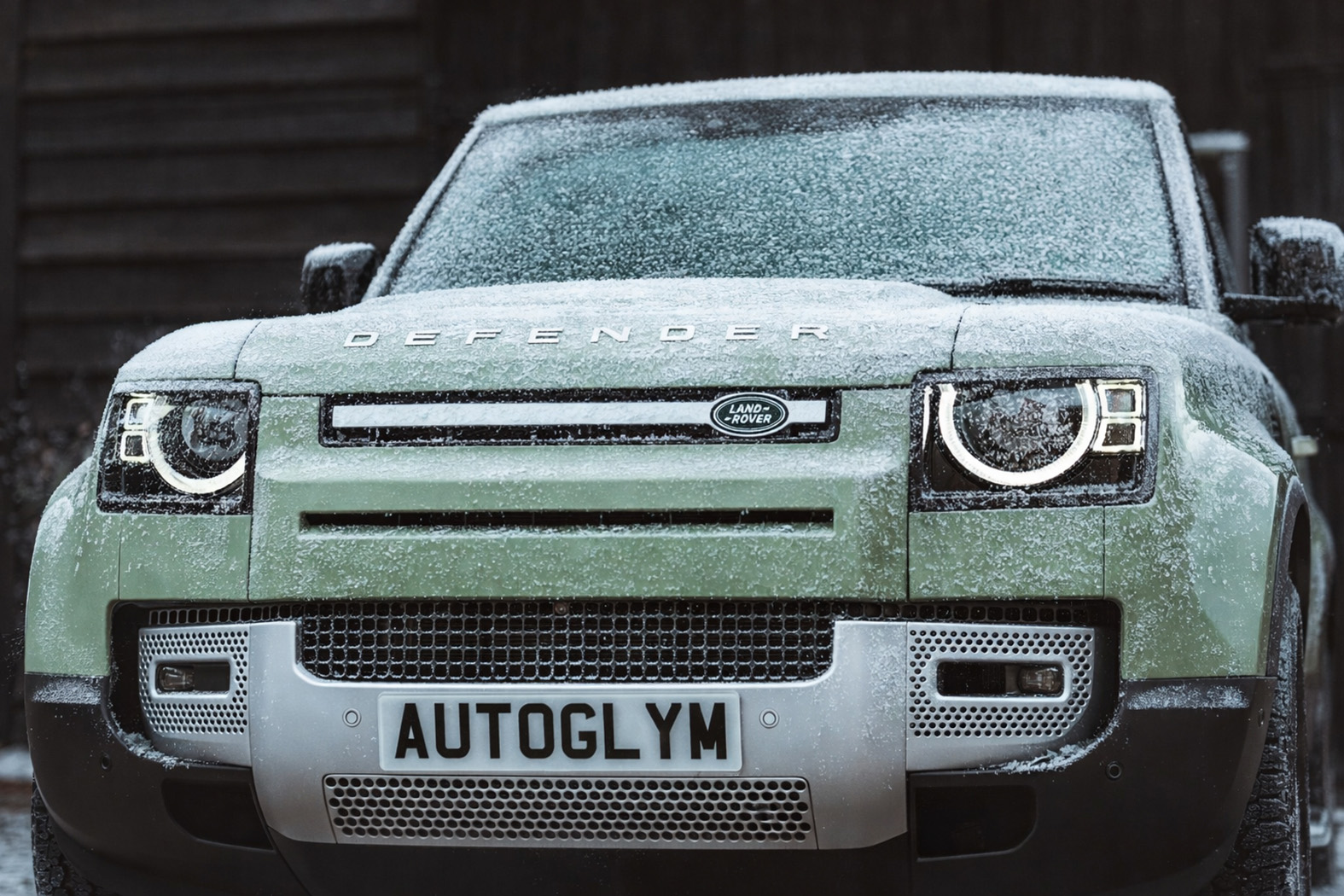
A NEW nationwide survey has found that a significant proportion of UK motorists admit to not fully clearing their windscreen of snow and ice before driving off during winter months, and that share is significantly higher among younger drivers.
In the survey, commissioned by car care brand Autoglym, car owners were asked if they ever drive off before their windscreen is completely clear of snow and ice during winter months, and 43 per cent answered ‘yes'.
Among those aged 25-34 that number jumps to 67 per cent, and for those aged 18 to 24 it is 64 per cent.
Older drivers are far more cautious with just 21 per cent of those aged 65 and over say they drive off before properly clearing the windscreen of ice or snow.
Men are more likely to drive off before clearing snow - 45 per cent do so, compared to 40 per cent of women. Looking at areas of the UK where respondents are based, those in London (52 per cent) and in Scotland (52 per cent) are most likely to drive off without properly clearing the windscreen, whereas those in Northern Ireland are least likely at 25 per cent.
Section 41D of the Road Traffic Act 1988 makes it a legal requirement to have a clear view of the road ahead before you set off, which means the windscreen should be fully de-iced on the outside and thoroughly demisted on the inside.
Failure to do so could result in penalty points and a fine, as well as creating a significant risk of a collision with other road users. The requirements are also enshrined in Rule 229 of the Highway Code.
A key reason why people aren't clearing snow properly could be that they are resorting unconventional tools and methods to do so.
When asked about how they go about the task, 32 per cent of UK car owners said they use‘a bare or gloved hand'.
Other unconventional methods for shifting snow and ice from windscreen include‘a credit, debit or loyalty card'(28 per cent), a‘broom or dustpan brush'(18 per cent),‘boiling or hot water'(17 per cent),‘kitchen implement, such as a spatula'(14 per cent),‘a book or magazine'(5 per cent) and even a‘mobile phone'(4 per cent).
On a chilly morning, consumers understandably want a rapid result, but some alternatives to de-icer are more likely to do more harm than good. An alarming 25 per cent of those in London say they use boiling or hot water to melt the ice - a method that results in a dramatic temperature change that can crack reinforced windscreen glass.
To safely and effectively remove ice on a car's exterior glass surfaces, Autoglym recommends using a quality de-icer.