A RARE example of Roman-era recycling has been unearthed during archaeological investigations on the site of the new extension to the home of Rolls-Royce at Goodwood in Sussex.
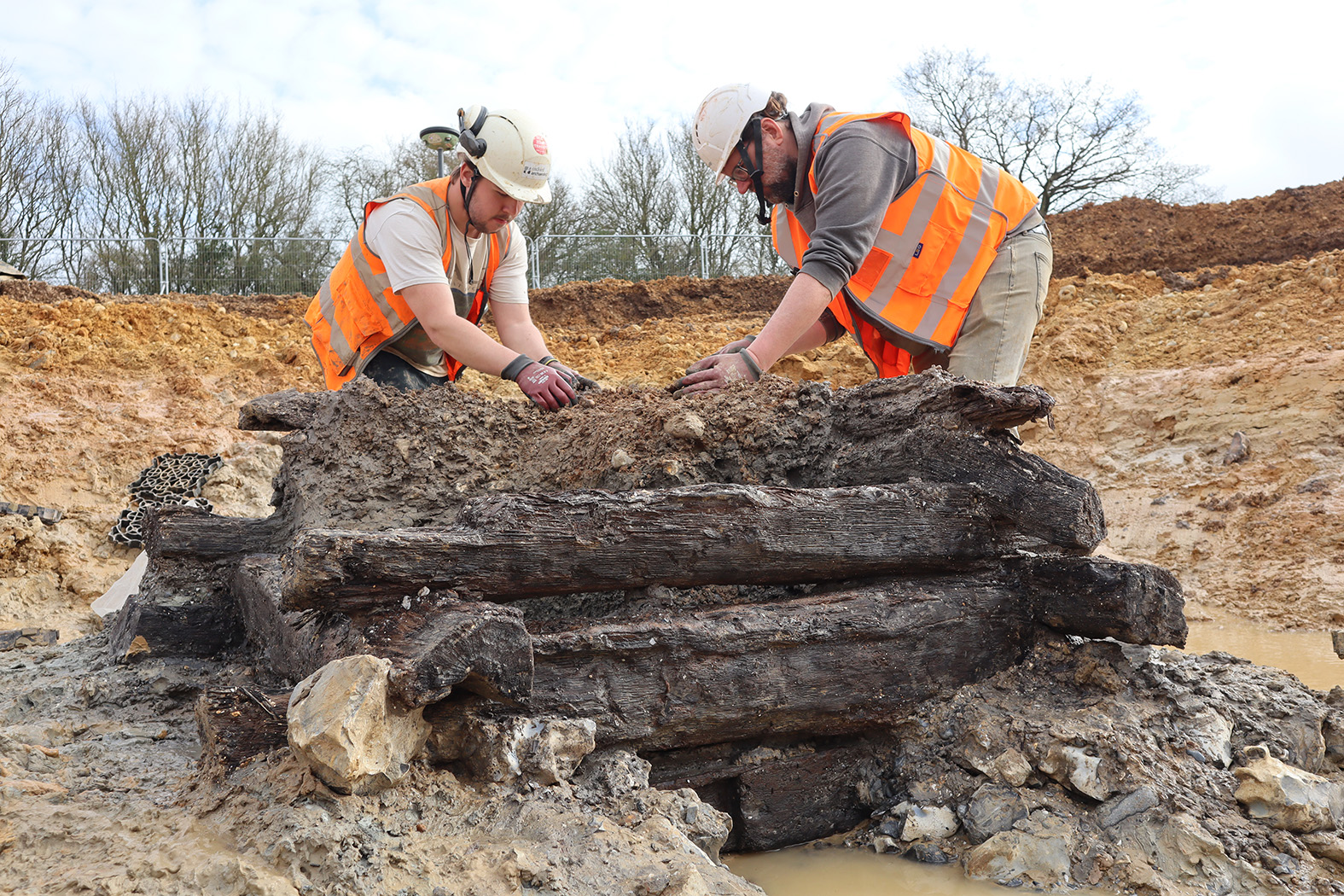
Experts from Oxford Archaeology, one of Europe's largest and longest-established independent archaeology and heritage practices, discovered the remains of a Roman well during the closing stages of a six-month investigation, following earlier geophysical surveying and exploratory trenching.
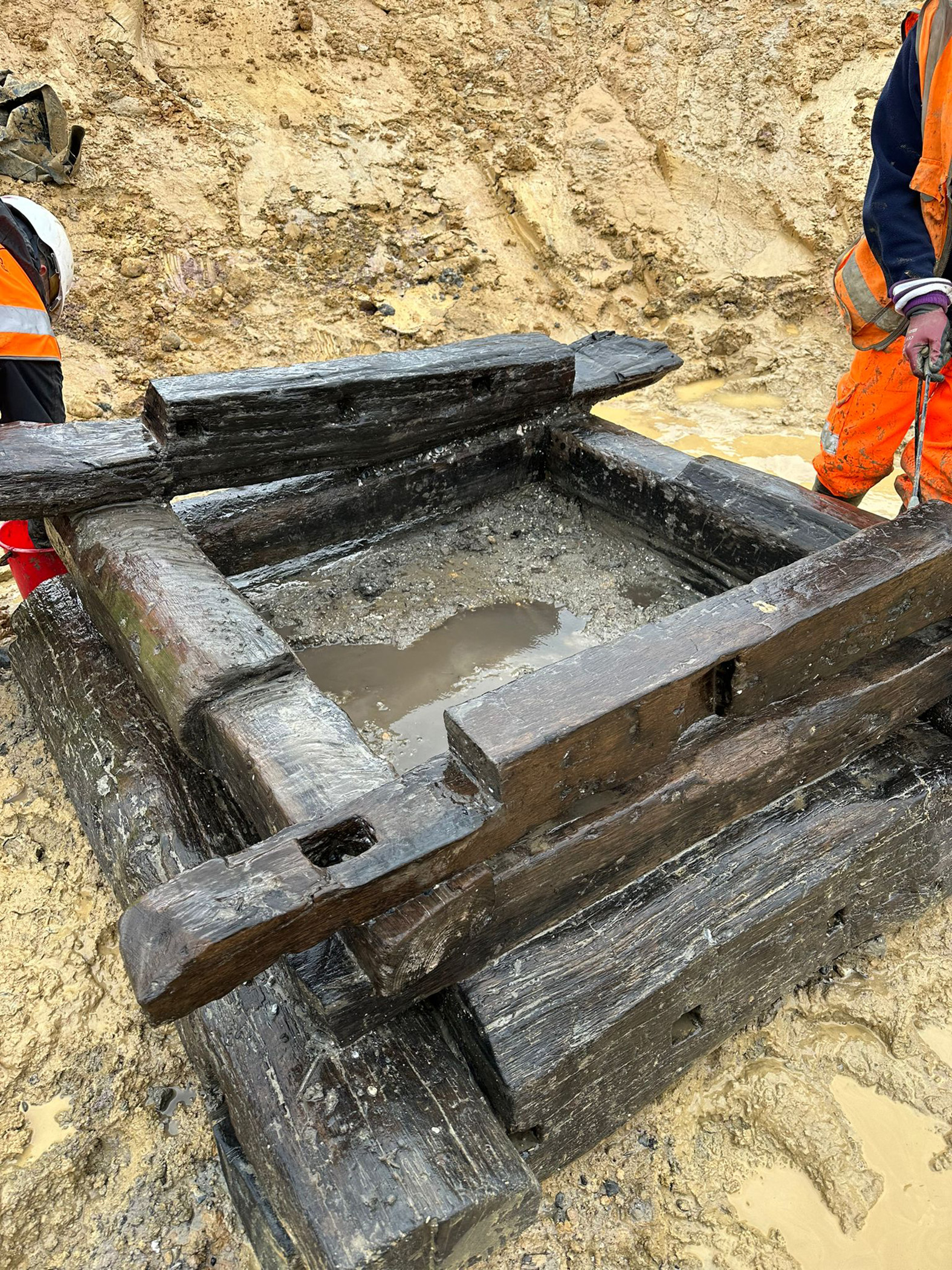
The well would have stood seven tiers high and was constructed from 28 timbers.
The team identified evidence that eight timbers had previously been used as they displayed mortices, tenons and chamfered edges.
These woodworking features suggest they were formerly used in buildings, most likely as sill beams and posts, before being reshaped to build the lining of the well.
Comparable examples of recycled timbers have been recorded at other major Roman settlements, including York, Carlisle and London.
The timbers found originated from the base of the well and would have been permanently waterlogged and the timber bracing would have extended to ground level.
The timbers are now being sampled for dendrochronological dating, which involves counting the rings to help determine the year in which the trees were felled.
Further analysis should reveal the kinds of tools used to work the timbers; it may even be possible to reconstruct the forms of the trees from which the timbers were cut, providing insight into how woodlands were being managed and felled in the locality.
The home of Rolls-Royce lies on the outskirts of Chichester, which from the mid first century when the Romans established the settlement was known as Noviomagus Reginorum until the end of their rule in Britain in the early 5th century; ‘Noviomagus' widely thought to mean ‘new market' in Latin and ‘Reginorum' referring to the Regni, the local Celtic tribe allied with Rome.
In addition to the well, the dig has revealed evidence of human activity dating back to the Neolithic period (4000-2200 BCE), including tools and pottery.
The artefacts are currently undergoing further study and cataloguing to develop a more detailed understanding of life in the local area over the past six millennia. One early hypothesis is that the site was once used for metal-working activities. If confirmed, this would suggest that Rolls-Royce is continuing a long, but often overlooked, tradition in this part of southern England.
The artefacts were displayed at a Neighbours Information Evening and will eventually be given to Chichester's Novium Museum situated less than three miles from the Home of Rolls-Royce, allowing the local community to gain new and fascinating insights into the place they and Rolls-Royce call home.