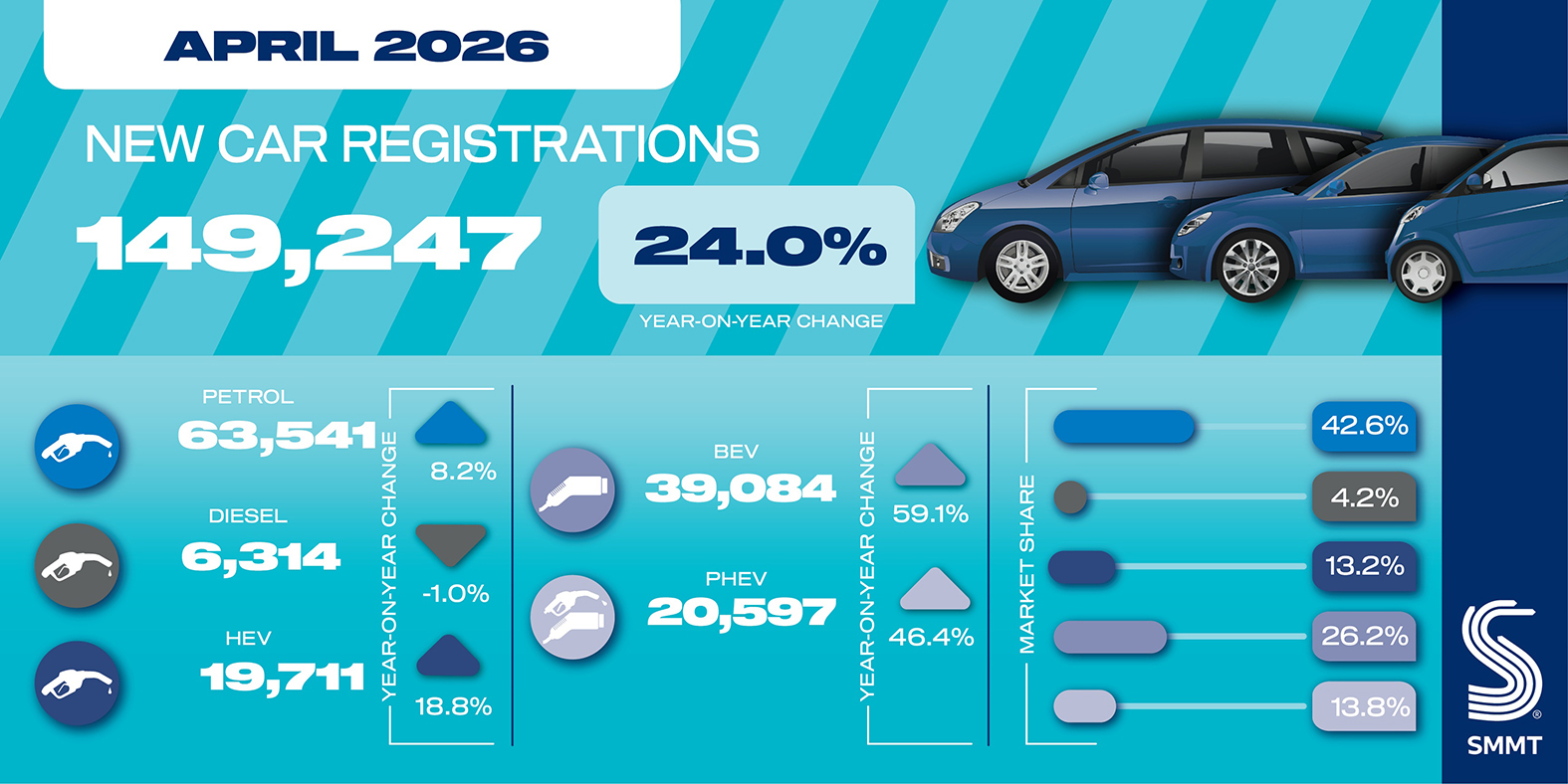
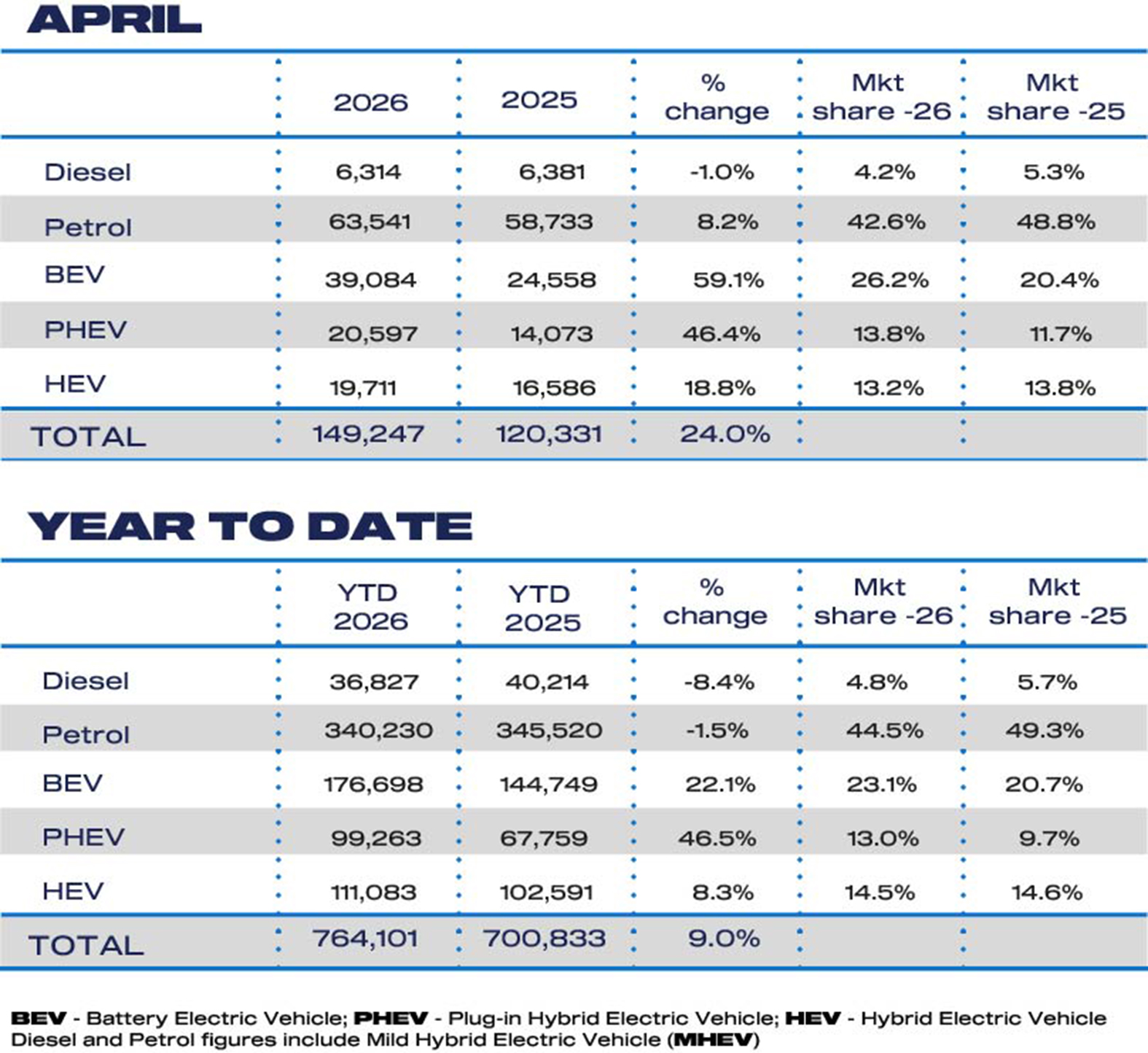
THE UK new car market grew by 24.0 per cent to reach 149,247 registrations in April, according to the latest figures published by the Society of Motor Manufacturers and Traders.
The increase reflects a rebound from an unusually weak April last year, when buyers pulled purchases forward to March to beat incoming vehicle tax increases, including the application of VED and the Expensive Car Supplement on battery electric vehicles.
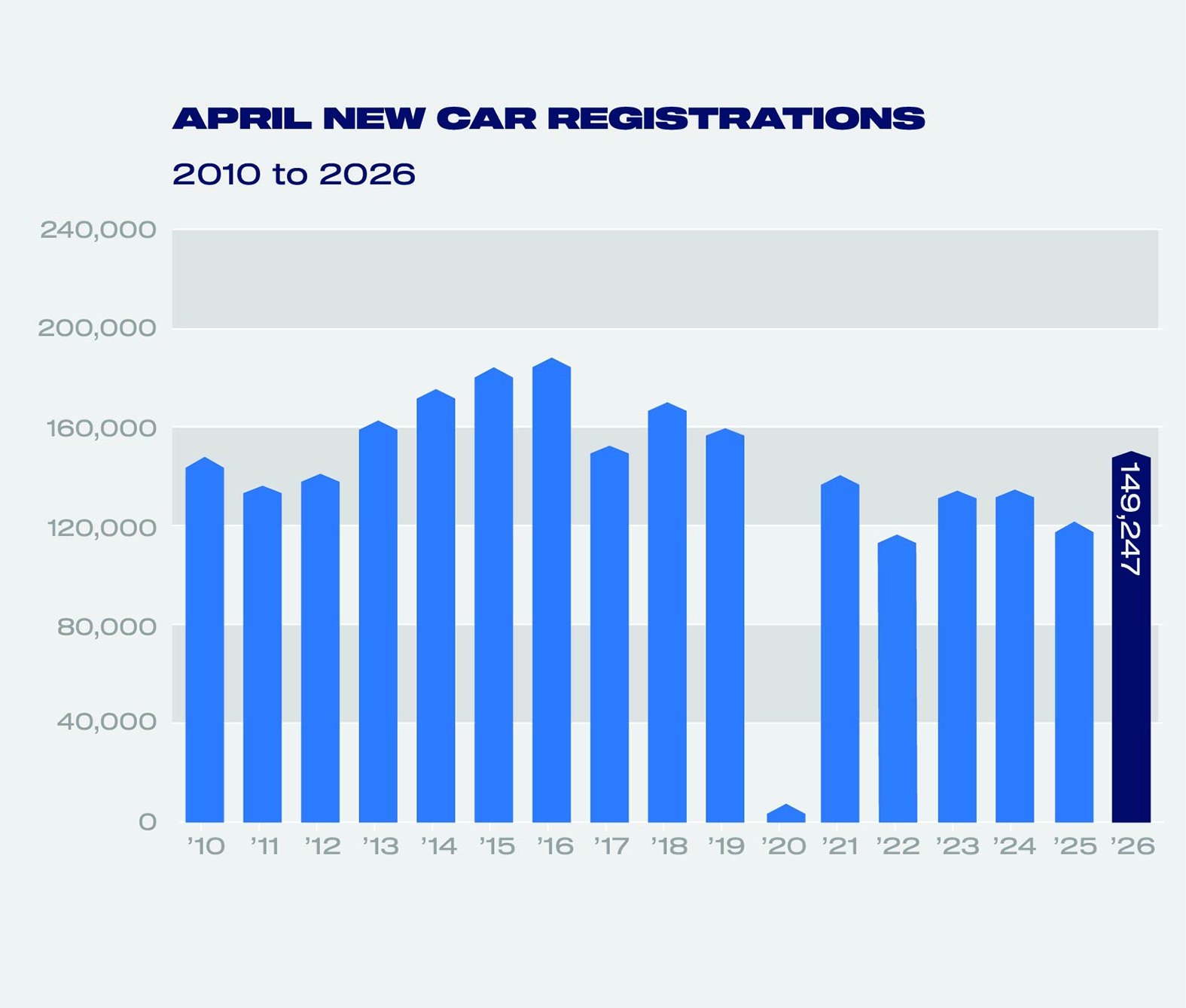
While April remains a traditionally low volume month, magnifying year-on-year variation, this was the best outturn since 2019's 161,064 units.
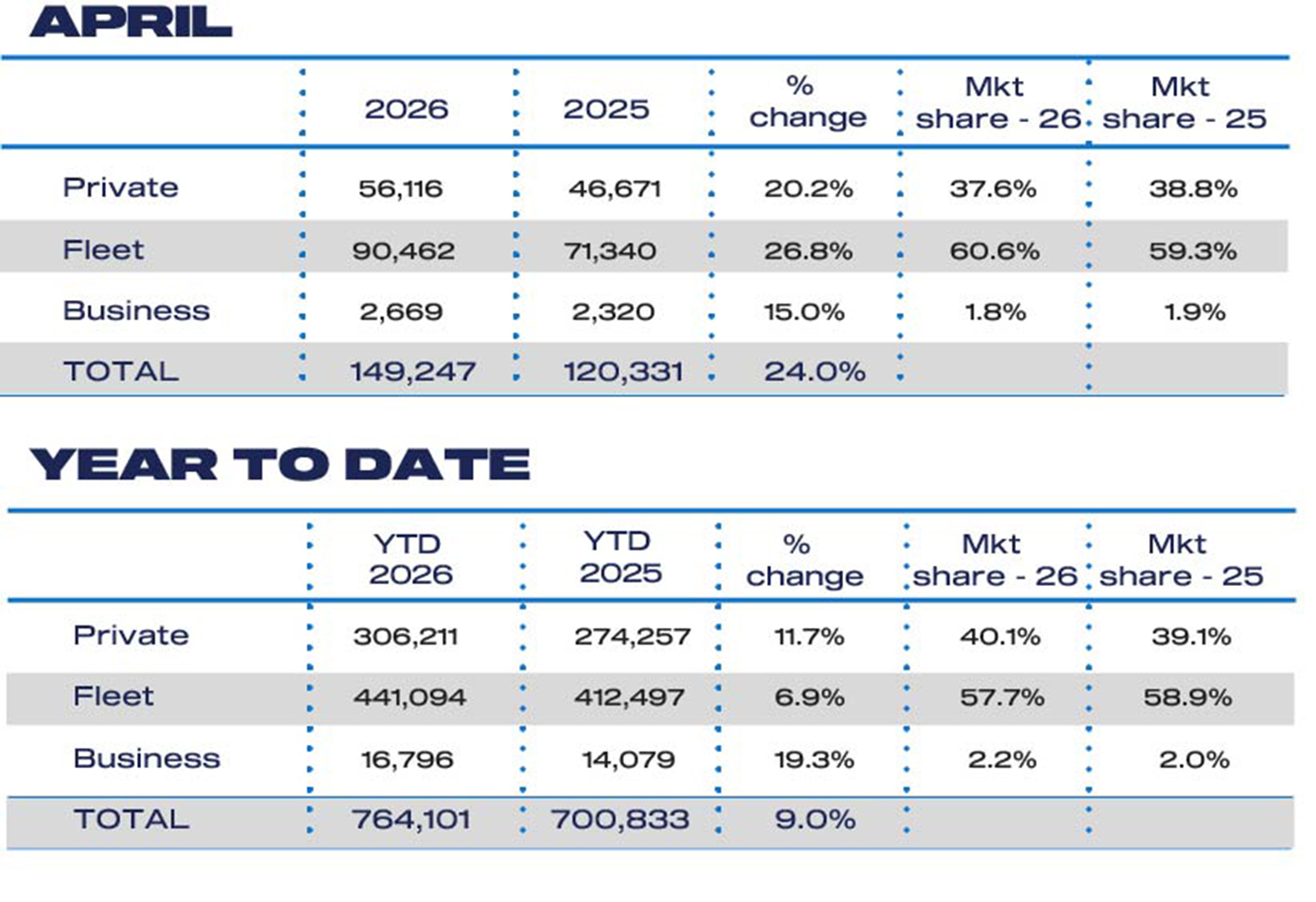
Growth was recorded in all sectors, led by fleets, up 26.8 per cent to 90,462 registrations.
Private retail deliveries grew 20.2 per cent to reach 56,116, while registrations by the smaller business sector rose 15.0 per cent to 2,669.
Demand for petrol cars rose 8.2 per cent, while diesel registrations fell by 1.0 per cent. Electrified cars accounted for more than half (53.2 per cent) of the market for the second month this year.
Plug-in hybrid registrations rose 46.4 per cent to take a 13.8 per cent market share, while hybrid electric vehicles increased 18.8 per cent, securing 13.2 per cent of new registrations.
Marking a market milestone, April also saw the two millionth battery electric car registered (2,012,758), following bumper growth of 59.1 per cent compared with last year.
As a result, BEV uptake reached a 26.2 per cent share of registrations in the month - an impressive performance albeit in a typically low volume month.
Year to date, BEVs comprise 23.1 per cent of the overall new car market, significantly short of the 33 per cent required by the Zero Emission Vehicle Mandate, despite billions in manufacturer discounts and the introduction of the Electric Car Grant last year.
The latest industry outlook, also published today, shows improving confidence in overall market volumes but also reflects weaker expectations for EV demand.
Total new car registrations in 2026 are now expected to rise 3.6 per cent to 2.093 million, up from January's 2.048 million outlook, but BEV share has been downgraded to 26.8 per cent, from 28.5 per cent, following an underperforming first quarter.
Looking ahead, the 2027 market is anticipated to reach 2.121 million units, 32.0 per cent of them BEVs - leaving a persistent gap of around six percentage points against the mandate target.
Energy, production and charging costs remain high and, as a result, demand has not grown as fast as assumed when the regulation was formulated.
The Iran conflict adds further uncertainty, the full impact of which is yet to be seen, with rising interest in EVs potentially tempered by concern over inflation, higher energy prices and the resultant negative impact on the cost of living.
Other major international markets are revising their transition plans to reflect geopolitical and market realities. The UK similarly needs an urgent review of the transition to avoid being put in an uncompetitive position, undermining consumer choice, investment and growth.
Mike Hawes, SMMT chief executive, said: "April's rebound is welcome, but underlines just how significantly fiscal changes can influence the market.Two million electric car registrations is a considerable milestone to celebrate, although natural demand is stillwell below the level demanded by the mandate.
"The mounting cost of compliance threatens to limit consumer choice, overall decarbonisation and the sector's competitiveness so the need for a rapid review of the transition to align policy with market realities is unchanged, else Britain's attractiveness as a vehicle market and manufacturing hub will be put at risk."