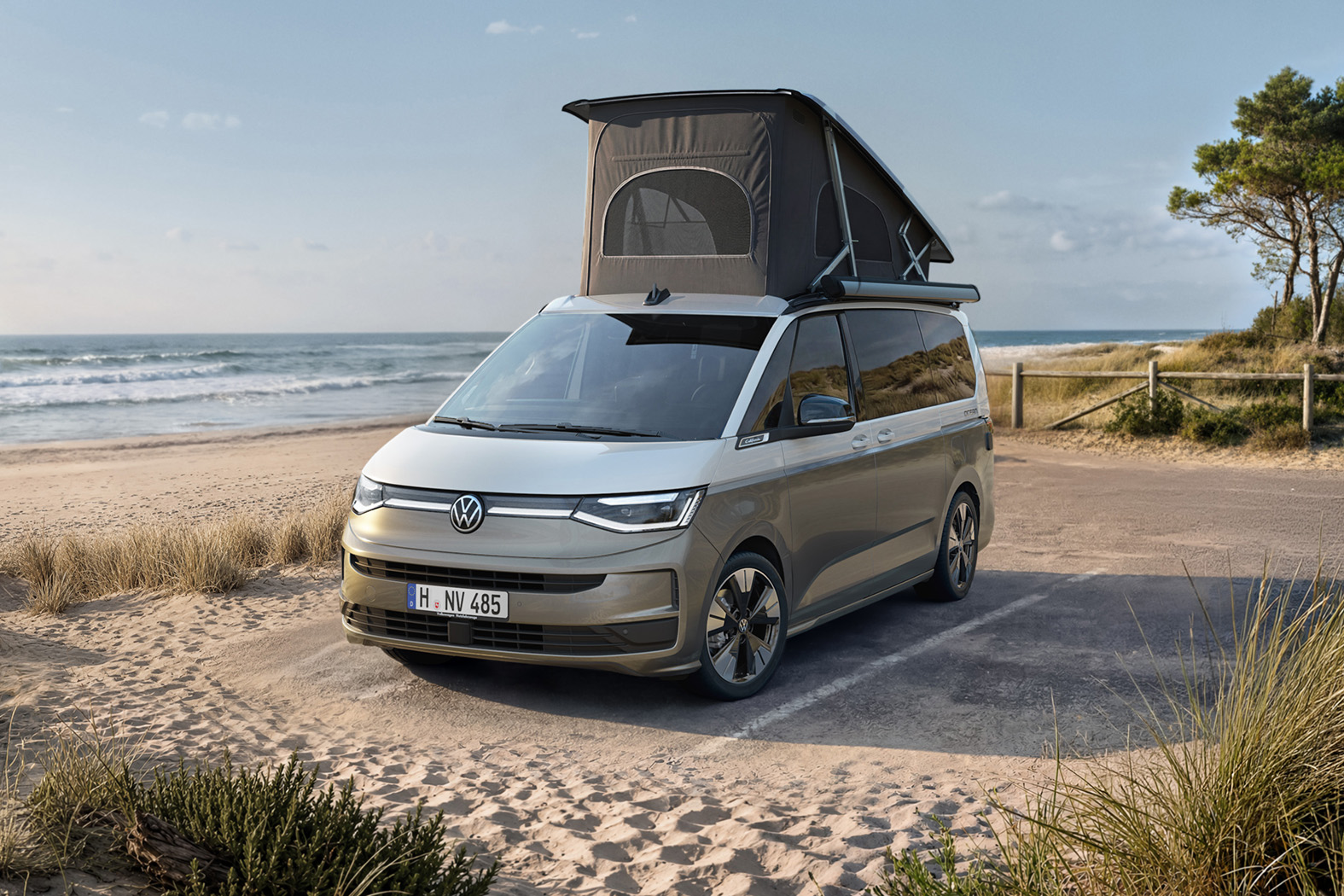
THE Caravelle name is making a comeback at Volkswagen as the company makes changes to both it and a new California campervan.
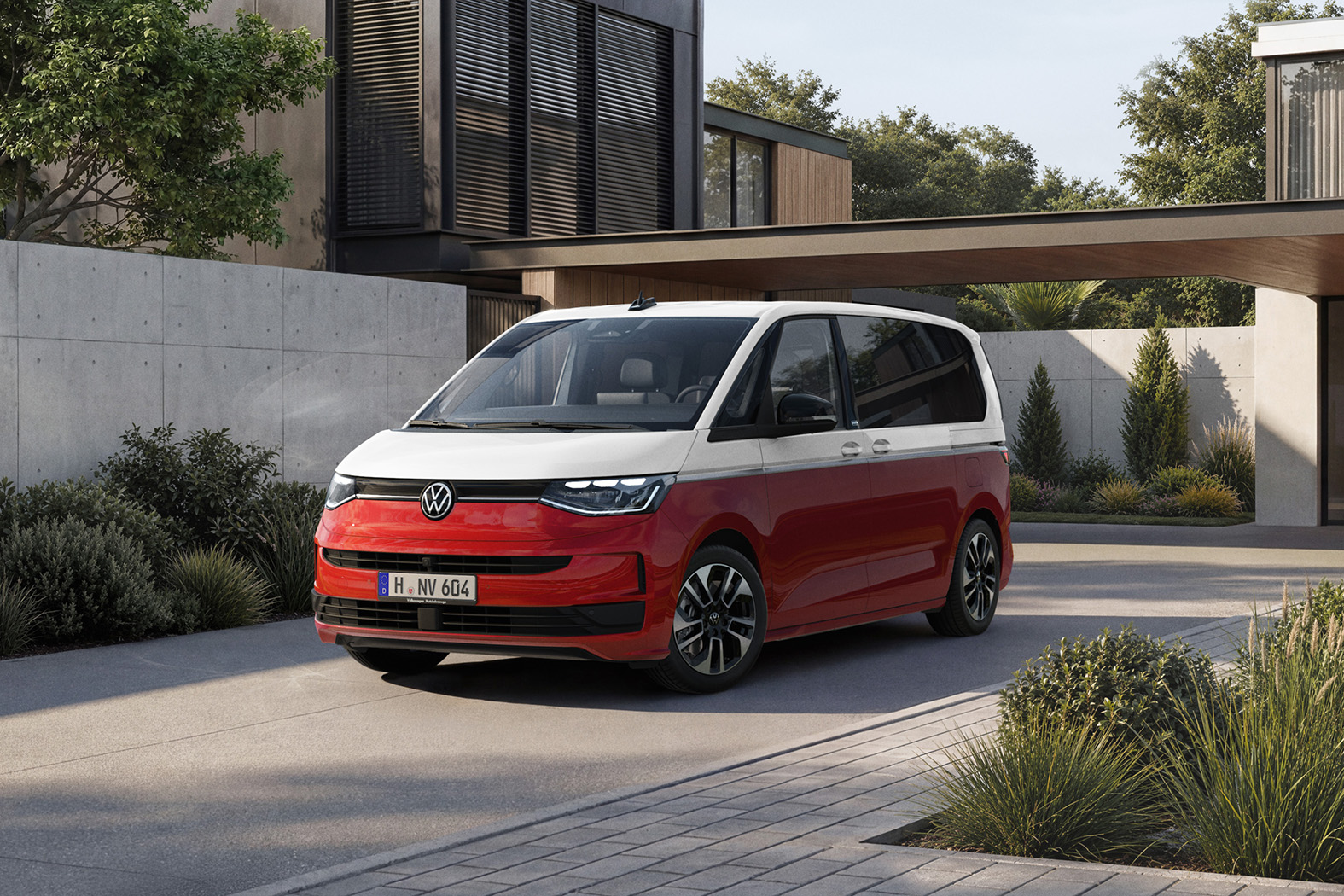
The two models - which have enjoyedcult status for decades - are getting an enhanced front end, new colours and wheel rims and a completely new cockpit landscape.
In addition, both VW Bus models have the latest stage in the development of the Travel Assist system, which now also offers automatic traffic light recognition for the first time.
Travel Assist also includes the Emergency Assist system for semi-automated vehicle assistance in a medical emergency.
Furthermore, the Caravelle and California will be available as a newly designed "Generation" special-edition model with particularly attractive equipment and an exclusive colour scheme.
The drive system highlights of both models include the eHybrid 4MOTION drive. Launched in 2025, the plug-in hybrid all-wheel drive has a system output of 245 psand a 19.7 kWh lithium-ion battery.
Both VW Bus models will again be configurable as front-wheel drive vehicles with a 150 ps turbodiesel engine and aturbocharged TSI petrol engine with an output of 204 ps.
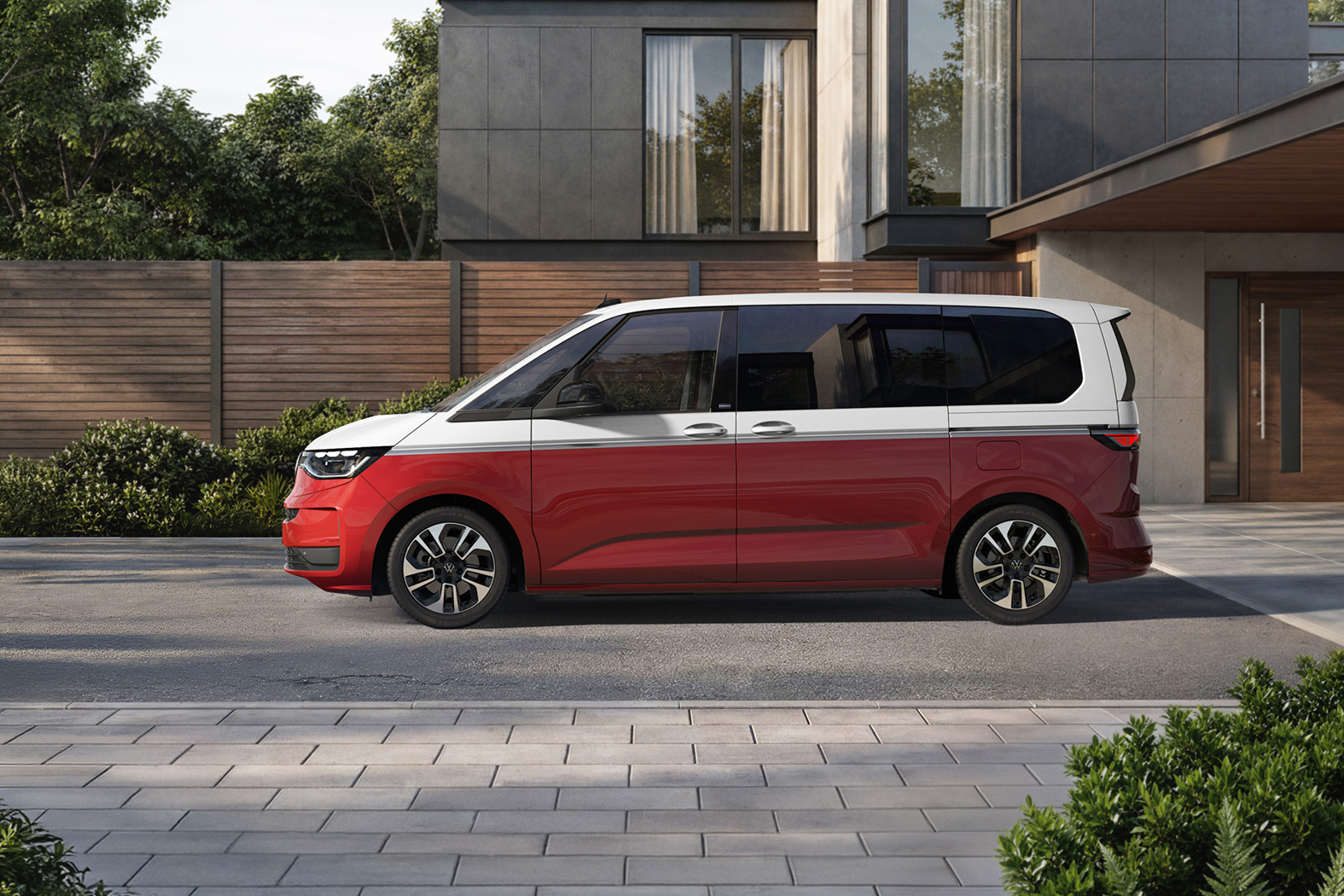
Volkswagen Commercial Vehicles will also offer the new Caravelle in two body lengths and the California is based on the longer version.
The enhanced VW Bus models will be offered in the following equipment versions - Caravelle Trend (entry-level model with new name),Caravelle Life and top specification Caravelle Style as well as California Beach, California Coast and the flagship California Ocean.
The Caravelle and California Generation special-edition models are a new addition to the range. The new two-tone paint finish Candy White/Sunset Red Metallic is reserved exclusively for the two models.
VW's designers have revamped the front end of the Caravelle and California below the bonnet. The LED headlights are visually distinctive and are now larger, sharpening the typical VW Bus face. The upper daytime headlight is now more pronounced and spans the LED modules for dipped and high beam like an eyebrow. In the middle, the headlights are connected by a glass-covered horizontal strip, which is also illuminated in the higher-spec versions. This new layout has made the light signature of the Caravelle and California much more striking.
In addition to their appearance, the technical design of the headlights is also completely new and now offer higher light efficiency.
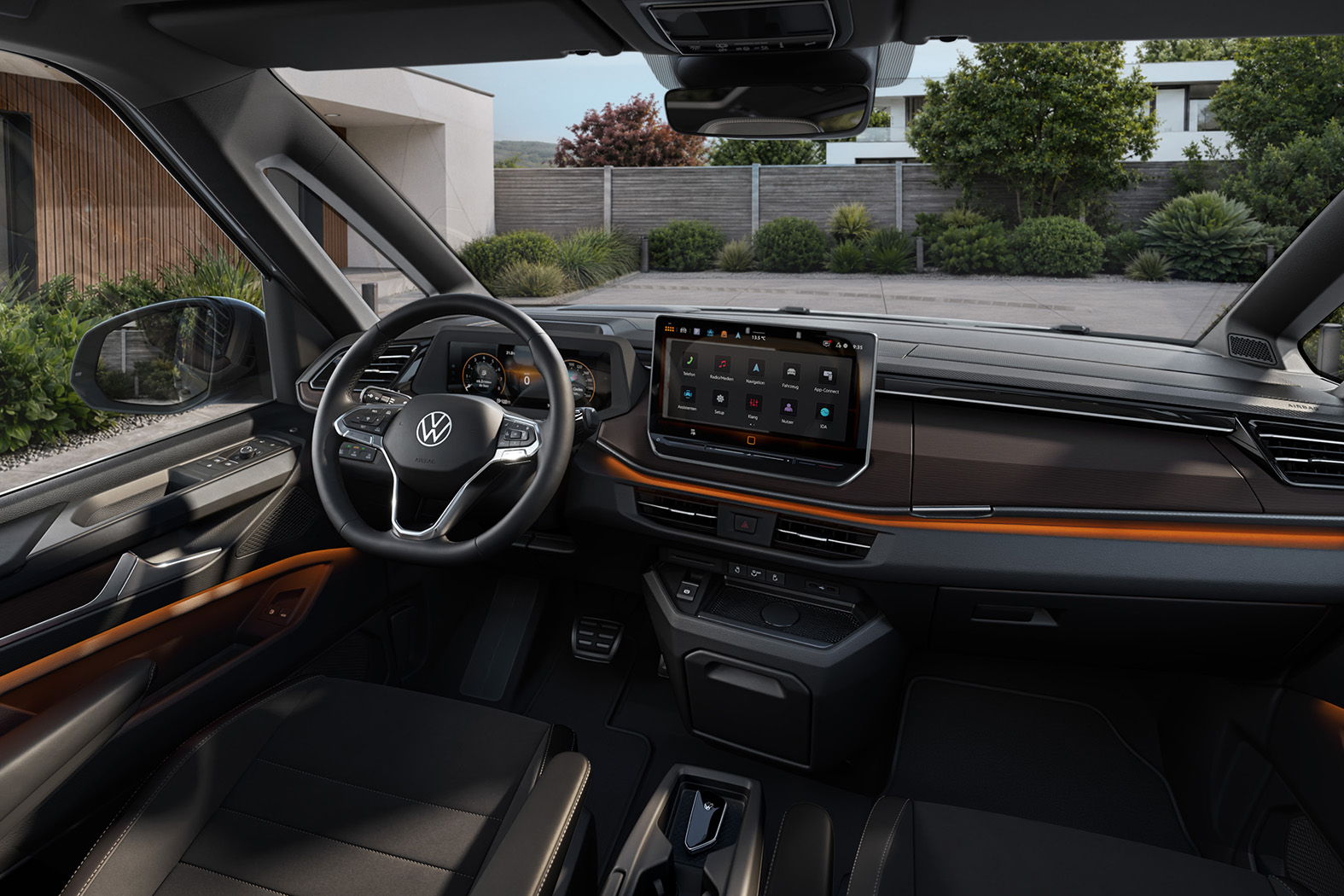
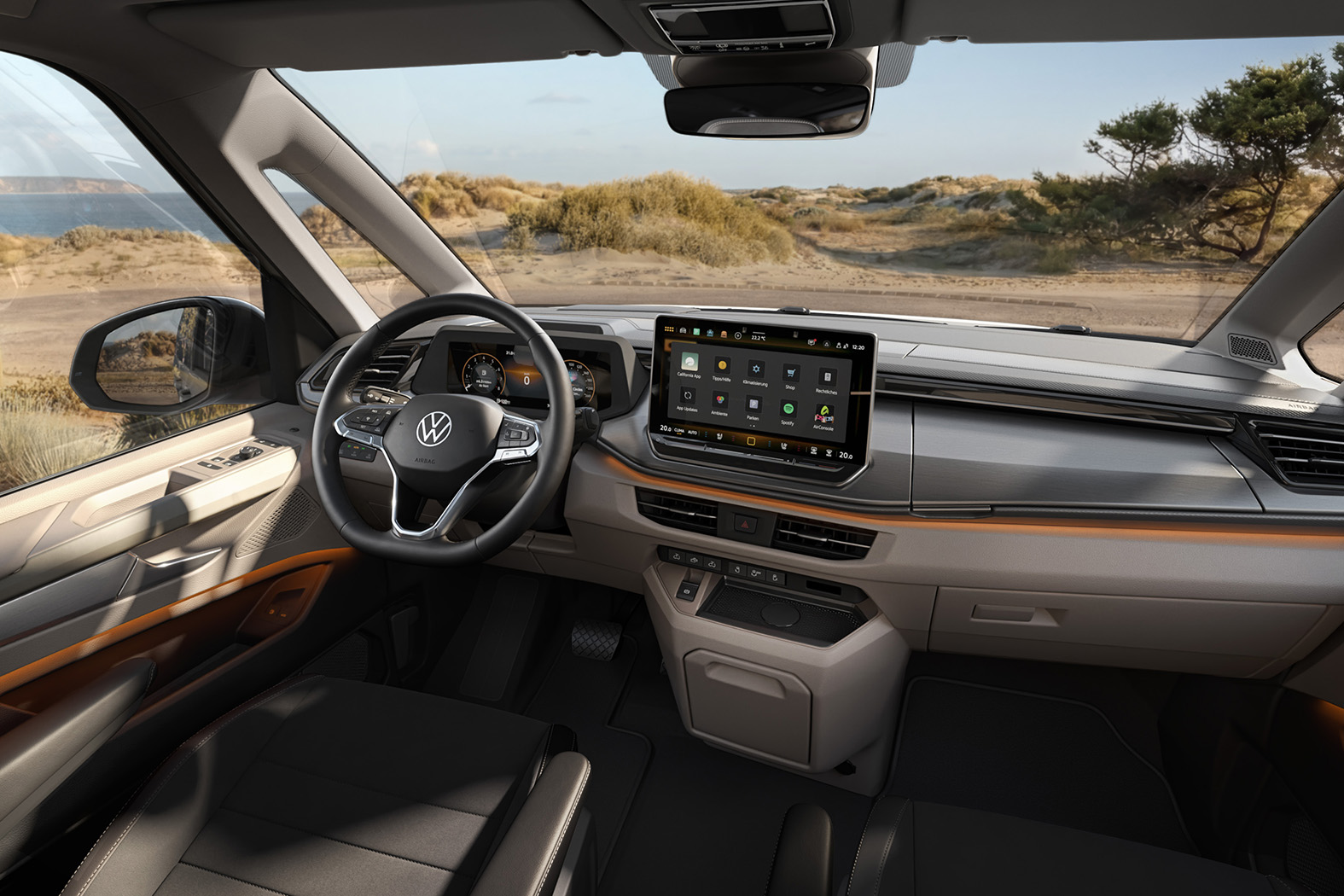
Major changes have been made to the interior of both Volkswagen commercial vehicles. The newly developed dash panel landscape with higher-quality surfaces and integrated topstitching. From a technical standpoint, the instruments represent a new stage in the development of the Digital Cockpit and a new generation of infotainment systems.
The Digital Cockpit offers three different views, which can be changed in seconds using a ‘View' button on the multifunction steering wheel. The driver also has the option of using the OK button to reduce the number of displays so that, for example, only the most important information is displayed on long journeys.
Like the ID. Buzz, the infotainment system touch display is now visually free-standing. It now features a new menu structureand graphics. The display itself is significantly larger than before with a diagonal of 12.9 inches. Illuminated touch sliders for the audio and air conditioning functions are integrated below the infotainment system.
Like in the ID. Buzz, the automatic gearbox is now operated via a steering column switch on the right of the steering column. All Caravelle and California models have a direct shift gearbox (DSG) on board.
The centre console of the Caravelle and California has also been restructured. The optionally available electrically opening and closing sliding doors and the parking brake are now operated by means of a button in the centre console. Significantly larger and more accessible: the inductive and thus wireless charging base for smartphones is now equipped as standard. The charging capacity of the inductive interface has been increased from five to 25 watts. The charging capacity of the USB-C ports has been increased from 45 to 60 watts per connection. In addition to the two front USB connections, there are additional USB-C ports in the rear as standard. Enhanced background lighting includes an illuminated drink holder.
New assist systems in the Caravelle and California include the enhanced Travel Assist system. Among other things, the latest generation of the system offers traffic light recognition for the first time and enables assisted lane changing on the motorway. Emergency Assist is once again integrated into the Travel Assist system - if the driver suffers a medical emergency, this system steers the VW Bus in various stages onto the hard shoulder or the outermost lane and brings the vehicle to a stop there.
The updated electric stationary air conditioning system in the Caravelle and California eHybrid 4MOTION offers added comfort and can now be operated for up to eight hours without interruption. This system allows both models to be electrically cooled, ventilated and heated when charging, parking or camping.
As a campervan model, the California and its eHybrid 4MOTION version are both still available with a classic auxiliary heater for continuous operation on board which is operated via the fuel system (standard equipment in the California Ocean, optional for other versions).
For the first time, the memory and massage functions are also available for the front passenger seats and are offered in conjunction with the optional AGR ErgoComfort seats.
The range of seat configurations for the Caravelle has been reorganised. For the first time, there will be a vis-à-vis configuration for the eight-seater variant, in which two groups of three people can sit facing each other in the rear.
Caravelle Life and Style will already be equipped with two armrests on both sides instead of just one on one side in the second seat row with the exception of the eight-seater.
Volkswagen Commercial Vehicles UK is bringing the Caravelle name back to its line-up, with the launch of its newest multi-person vehicle carrier.
The new Caravelle nameplate, which replaces the outgoing ‘Multivan' in the range, brings the heritage of Volkswagen and the name into the modern day.
The T3 introduced in 1979 was the first generation to wear the Caravelle nameplate. Also known as T25, it was introduced to distinguish it as a passenger-focused model, and heralded the introduction of a seven-seat arrangement that would set the format for future generations.
VW says the Caravelle name being reintroduced in the market ensures closer alignment to the brand's global naming strategy and ensures customers around the world see familiar names and understand the Volkswagen Commercial Vehicles line-up, wherever they are in the world.
David Hanna, managing director at Volkswagen Commercial Vehicles, said: "Bringing the Caravelle name back to the UK was essential, it is firmly anchored in people's minds as to what it offers, a premium multi-seat vehicle, with the unmistakable Volkswagen logo at the front. There are many brands that can offer similar products, but they cannot match our heritage. Resurrecting these well-known names that are trusted and loved by British consumers, also reflects the wider approach of the Volkswagen Group."




 copy.jpg)
.jpg)