UK car production fell in August, breaking a two-month growth run, according to the latest figures published by the Society of Motor Manufacturers and Traders.
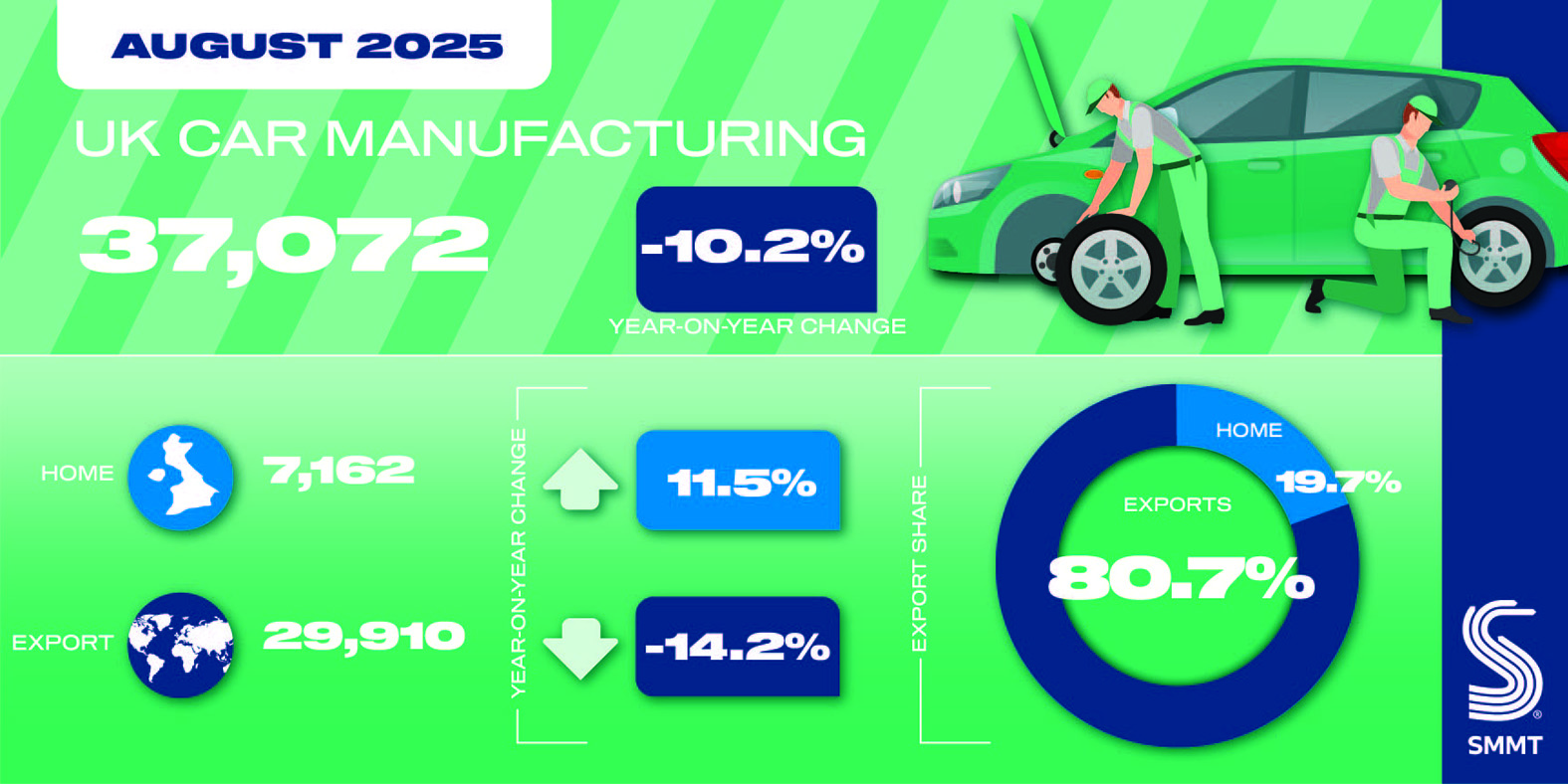
Some 37,072 units rolled out of factories in what is traditionally the quietest month of the year, with planned summer shutdowns taking place to enable maintenance and retooling.
The figures come before the cyberattack on the UK's largest automotive employer, the effects of which will likely be evident in September's performance.
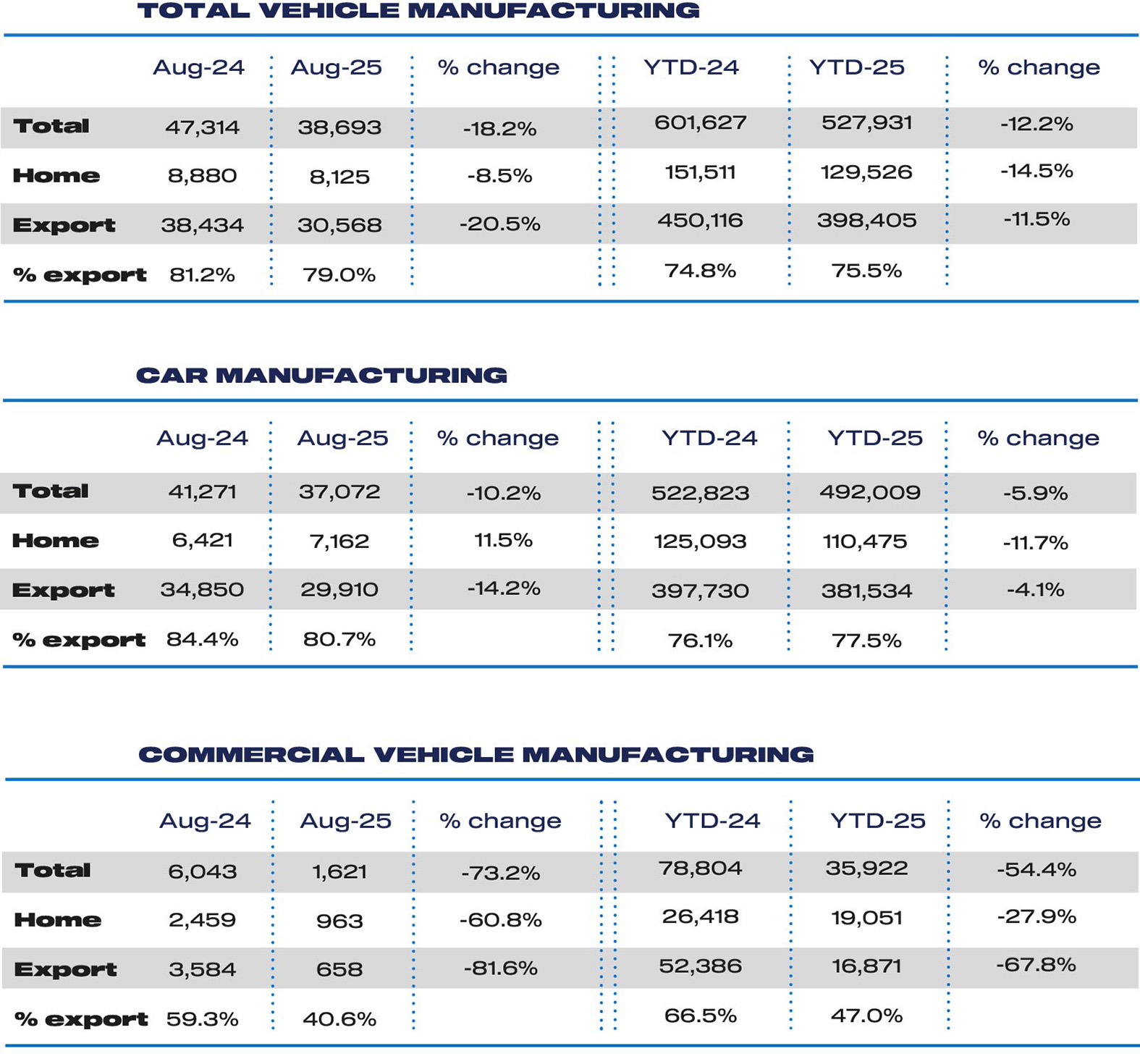
Continuing the recent trend, commercial vehicle (CV) production also declined, by -73.2 per cent to 1,621 units, driven by the consolidation of manufacturing operations at a Jaguar Land Rover.
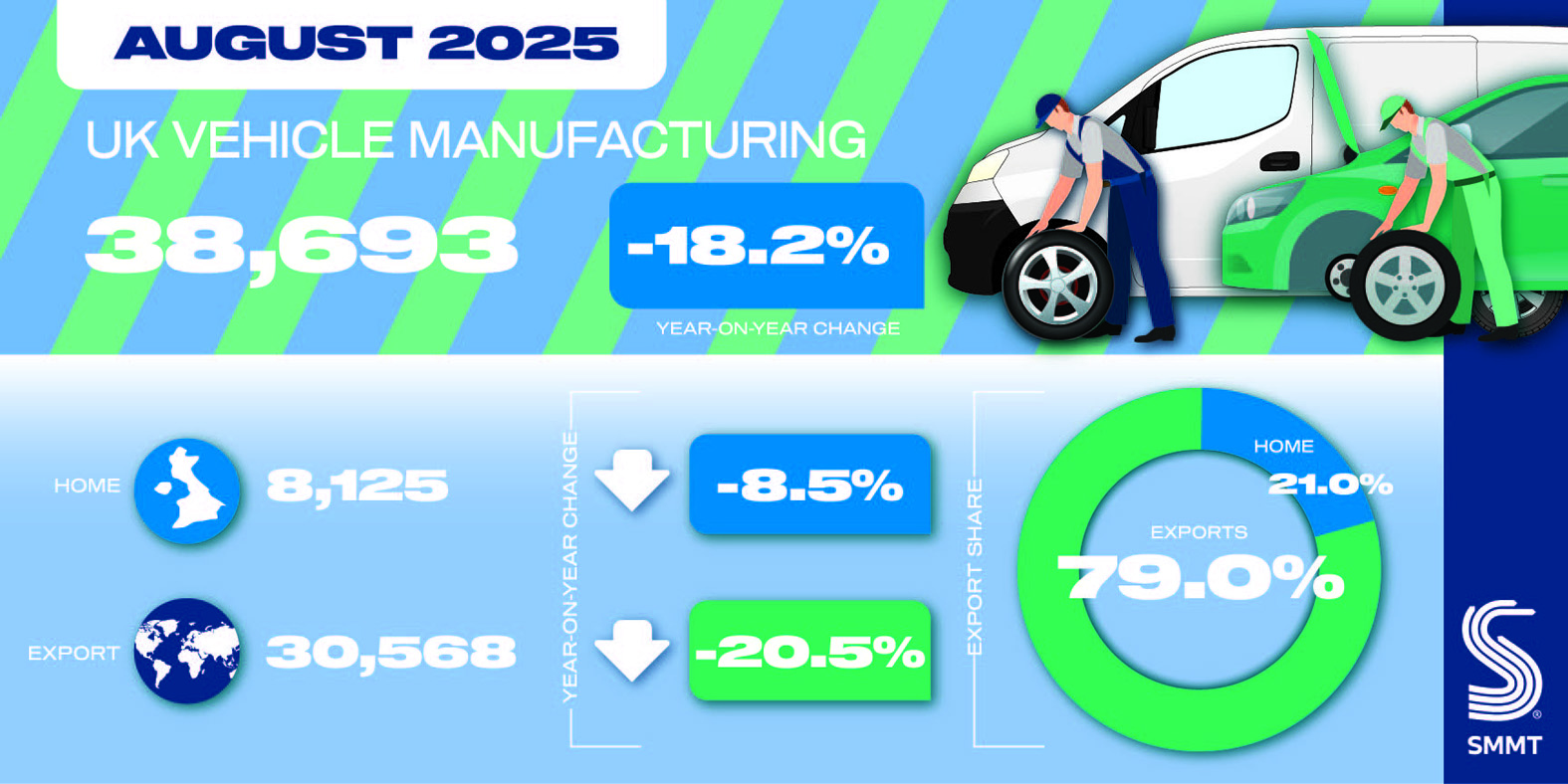
Combined UK vehicle production was, therefore, down 18.2 per cent in August to a total of 38,693 units, the weakest performance since 1956 and illustrating the challenging environment facing UK automotive manufacturers, with soft conditions in the sector's largest market, the EU, significant cost pressures, model transitions and slow economic growth.
Car production for the UK market rose by 11.5 per cent to 7,162 units but was not enough to offset a 14.2 per cent fall in exports. 29,910 cars were made for overseas customers in August - representing 80.7 per cent of output.
While overall car output fell, electrified car production rose by 40.9 per cent to 16,830 units, with hybrid, plug-in hybrid and battery electric vehicles accounting for almost half (45.4 per cent) the units produced in August - the second-best share of output for any single month.
In the year to date, factories have turned out more than 200,000 of these vehicles, up 3.7 per cent on 2024, although total car output is down 5.9 per cent to 492,009 units. CV output year-to-date, meanwhile, is down 54.4 per cent to 35,922 units.
Mike Hawes, SMMT chief executive, said"August is always a low volume month due to planned summer maintenance, but the focus is now on September's performance, and the likely impact of the cyberattack at Britain's biggest automotive employer. Given this incident and the industry's importance to jobs, growth and trade, rapid delivery of the Industrial Strategy and Drive35 is now critical. The sector is resilient, but SMMT is engaged with members and the government to understand what additional supportive measures may be needed."